
#archive
-
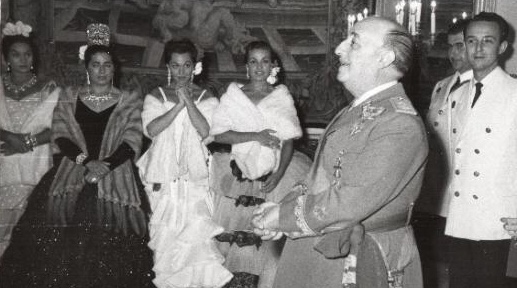
Nacionalflamenquismo: State Sponsorship and the Construction of Authenticity under the Franco Regime
Following the Spanish Civil War, General Francisco Franco established a fascist, authoritarian dictatorship that ruled Spain from 1939 until his death in 1975. This regime deliberately co-opted flamenco, transforming a historically marginalised practice into a tool for state-building. The phenomenon of nacionalflamenquismo functioned as a coercive strategy designed to appropriate this cultural form. By claiming…
-
Demófilo and the Folkloric Turn: The 1881 Colección as a Foundational Text
When Antonio Machado y Álvarez published his Colección de cantes flamencos in Seville in 1881 under the pseudonym “Demófilo”, he did not merely assemble an anthology of Andalusian lyric verse; he staged an intervention. Appearing precisely at the moment when the café cantante was consolidating the commercial professionalisation of flamenco, the Colección sought to rescue…
-
The Archival Illusion: How the Golden Age Disciplined Flamenco
The concept of the Edad de oro (Golden Age) remains one of the most resilient structuring fictions in flamenco historiography. Conventional narratives routinely map this epoch onto the final decades of the nineteenth century, demarcating a luminous window in which vocal virtuosity, stylistic variety, and uncorrupted expressive intensity purportedly reached their apex. Yet treating the…
-
The Phonograph and the Archive: Early Sound Recording and the Standardisation of Cante
The early interactions of early sound recording and flamenco history demand a methodologically eclectic framework capable of critiquing long entrenched polarised positions. To frame the introduction of phonograph cylinders and 78 rpm shellac discs from the 1890s onwards simply as an unmediated preservation of an authentic tradition or as a purely destructive commercial corruption is…
-
What are the primary sources for a history of flamenco’s Golden Age?
Constructing a history of flamenco’s Golden Age requires navigating a complex landscape of traditional archives and ephemeral traces. Because this period coincides with the rise of industrial modernity, the primary sources are not limited to written texts but extend into the realms of the visual and the acoustic. These sources reveal the “Flamenco Effect” in…