
#politics
-
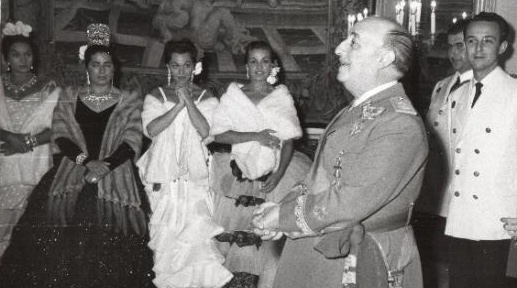
Nacionalflamenquismo: State Sponsorship and the Construction of Authenticity under the Franco Regime
Following the Spanish Civil War, General Francisco Franco established a fascist, authoritarian dictatorship that ruled Spain from 1939 until his death in 1975. This regime deliberately co-opted flamenco, transforming a historically marginalised practice into a tool for state-building. The phenomenon of nacionalflamenquismo functioned as a coercive strategy designed to appropriate this cultural form. By claiming…
-

The Economics of Exile: Patronage, Migration, and the Itinerant Flamenco Artist during the Crisis of the State, 1923–1939
The collapse of the Restoration regime and the subsequent dictatorship of Miguel Primo de Rivera (1923–1930) fractured the traditional geographic enclaves of Andalusia, driving performers into the expanding metropolitan networks of Madrid, Barcelona, and international circuit destinations. Canonical historiography frequently treats the Golden Age as a stable, regionally bounded ecosystem of the café cantante, yet…
-
Boris Asaf’ev and Flamenco: the Soviet connection
In mainstream musicological scholarship outside Eastern Europe, Boris Asaf’ev (1884-1949) occupies a distinctly marginalised position. Frequently categorised merely as an institutional functionary of Soviet musicology or as the composer of state-sanctioned ballets such as The Fountain of Bakhchisarai, his theoretical output has rarely been acknowledged. This omission is further compounded by a simple historical reality: Asaf’ev…