
#debates
-
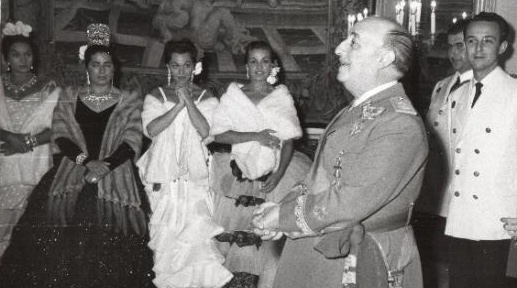
Nacionalflamenquismo: State Sponsorship and the Construction of Authenticity under the Franco Regime
Following the Spanish Civil War, General Francisco Franco established a fascist, authoritarian dictatorship that ruled Spain from 1939 until his death in 1975. This regime deliberately co-opted flamenco, transforming a historically marginalised practice into a tool for state-building. The phenomenon of nacionalflamenquismo functioned as a coercive strategy designed to appropriate this cultural form. By claiming…
-
The Archival Illusion: How the Golden Age Disciplined Flamenco
The concept of the Edad de oro (Golden Age) remains one of the most resilient structuring fictions in flamenco historiography. Conventional narratives routinely map this epoch onto the final decades of the nineteenth century, demarcating a luminous window in which vocal virtuosity, stylistic variety, and uncorrupted expressive intensity purportedly reached their apex. Yet treating the…
-
Beyond the “New”: Re-evaluating the Canon of Contemporary Flamenco Studies
The conceptualisation of a “new” flamencology, once a radical disruption to the mid-twentieth-century orthocanon established by Anselmo González Climent and his contemporaries, has itself matured into an established academic orthodoxy. When modern critical methodologies first challenged essentialist narratives of pure cante jondo, immutable Gitano-Andalusian dichotomies, and romanticised regional isolation, the movement earned its distinction by…
-
Flamenco’s Many Scholarships
The history of flamencology (a term not used until the 1950s) remains haunted by a persistent teleological fantasy: the notion that the study of flamenco has steadily progressed from the naive, essentialist myth-making of mid-twentieth-century enthusiasts towards the objective, enlightened maturity of the modern university. This narrative routinely casts founding figures such as Anselmo González…
-
Why Analysing Flamenco is Difficult
Within the discipline of musicology, the formal analysis of flamenco presents a unique set of challenges that test the limits of conventional music-theoretical frameworks. Whilst Western art music relies heavily on a written score to anchor and stabilise pitch and temporal parameters prior to execution, flamenco operates from within an oral paradigm of transmission. When…
-
The Modernist Invention of Tradition: Re-evaluating the 1922 Concurso de Cante Jondo
A persistent characteristic of the historiography of flamenco’s Golden Age (c. 1870–1930) is the tendency to impose a narrative of decline and rescue. The most prominent casualty of this approach is the Concurso de Cante Jondo, held in Granada during the festival of Corpus Christi on 13 and 14 June 1922. Standard historical accounts frame…
-
Flamenco and its dangers
To say I am in love with flamenco would be a significant understatement. My obsession began in the 1990s as a sudden, powerful fascination from which I have never quite recovered. However, I must also recognise a specific and complex danger within this passion: the risk that such love devolves into a fixation, a fetish,…