
#flamenco-effect
-
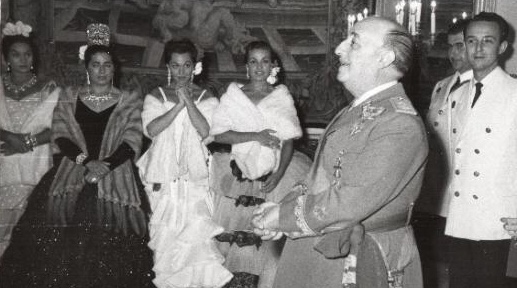
Nacionalflamenquismo: State Sponsorship and the Construction of Authenticity under the Franco Regime
Following the Spanish Civil War, General Francisco Franco established a fascist, authoritarian dictatorship that ruled Spain from 1939 until his death in 1975. This regime deliberately co-opted flamenco, transforming a historically marginalised practice into a tool for state-building. The phenomenon of nacionalflamenquismo functioned as a coercive strategy designed to appropriate this cultural form. By claiming…
-
The Archival Illusion: How the Golden Age Disciplined Flamenco
The concept of the Edad de oro (Golden Age) remains one of the most resilient structuring fictions in flamenco historiography. Conventional narratives routinely map this epoch onto the final decades of the nineteenth century, demarcating a luminous window in which vocal virtuosity, stylistic variety, and uncorrupted expressive intensity purportedly reached their apex. Yet treating the…
-
Disciplining the cante: From café cantante to Tablao
The performance spaces of flamenco have always been deeply intertwined with the material realities of Spanish politics and capital. The transition from the late nineteenth-century café cantante to the mid-twentieth-century tablao represents a deliberate restructuring of cultural production. By examining the political economy of the tablao, we uncover the mechanisms through which the regime of General Francisco Franco instrumentalised an…
-
The Modernist Invention of Tradition: Re-evaluating the 1922 Concurso de Cante Jondo
A persistent characteristic of the historiography of flamenco’s Golden Age (c. 1870–1930) is the tendency to impose a narrative of decline and rescue. The most prominent casualty of this approach is the Concurso de Cante Jondo, held in Granada during the festival of Corpus Christi on 13 and 14 June 1922. Standard historical accounts frame…
-
Defining the “flamenco effect”: institutional mediation and the Global North
The study of flamenco in the twenty-first century involves navigating a complex landscape of historical and institutional mediators. Central to this inquiry is what I call the “Flamenco Effect”. This is a term that captures evidential traces of flamenco’s agency, its ability to impact technoscapes and affective regimes. The concept serves as a foundational framework…